How Recommendations Are Prioritized
The energy advisor's report does not simply list every possible upgrade. HOT2000 models each measure individually and in combination, generating projected energy savings in gigajoules per year and estimated dollar savings at current fuel prices. The advisor ranks measures by two criteria: cost-effectiveness (savings relative to installed cost) and impact on EnerGuide score (which determines grant eligibility tiers).
In practice, the top four measures across most Canadian housing archetypes are: air sealing, attic insulation, basement insulation, and heating system replacement. Window replacement consistently appears but ranks lower because its dollar-per-gigajoule-saved ratio is less favourable than envelope improvements.
1. Air Sealing
Air sealing is almost universally the first recommendation and frequently the highest-return measure in older Canadian homes. The blower door test quantifies the scale of the problem; air sealing is the targeted response.
Contractors use a combination of materials depending on gap size and location. Acoustical sealant (a non-hardening caulk) handles gaps under 6mm around electrical boxes and plumbing penetrations. Expanding foam in one-component or two-component formulations fills larger gaps at the top plate, rim joist, and around ductwork. For systematic attic air sealing, contractors often temporarily remove insulation to access the ceiling plane, seal all bypasses, then reinstall or top up the insulation layer.
Installed costs for whole-house air sealing in a 185 m² detached house typically run between $1,200 and $3,500 depending on complexity. Energy savings range from 10% to 25% of total heating load, with payback periods of three to six years at current natural gas prices. Electric resistance heating households see faster paybacks because the cost per gigajoule is higher.
The Canada Greener Homes Grant requires a post-retrofit blower door test by the same registered energy advisor to confirm air leakage reduction. Retesting fees are typically included in the advisor's total service quote.
2. Attic Insulation
Heat rises, and inadequate attic insulation allows that heat to escape directly through the ceiling plane. Current National Energy Code of Canada targets for Climate Zone 6 (which includes Calgary, Saskatoon, and Ottawa) call for RSI 10.6 (approximately R-60) in attics. Many homes built in the 1970s contain only RSI 2.3 to 3.5 (R-13 to R-20) in blown mineral wool or fibreglass — less than a third of the current target.
The most common upgrade is blown-in attic insulation, which can be installed in a single day for most houses. Blown cellulose (recycled newsprint) is the dominant choice in Canada because it is inexpensive, has good settled R-value, and qualifies for most provincial rebate programs. Blown mineral wool is used where fire resistance or moisture resistance is a priority near HVAC equipment.
Costs vary by attic access, existing insulation, and whether air sealing must precede the insulation installation. Typical range for a standard house: $1,500 to $4,000. Projected energy savings: 8% to 18% of heating load depending on baseline conditions. The Canada Greener Homes Grant provides up to $3,500 for attic insulation improvements that achieve specific minimum RSI thresholds.
3. Basement and Rim Joist Insulation
Basements in Canadian homes present a different challenge from attics: the thermal boundary is often ambiguous, moisture is a persistent concern, and several insulation strategies compete depending on whether the basement is conditioned living space or unconditioned storage.
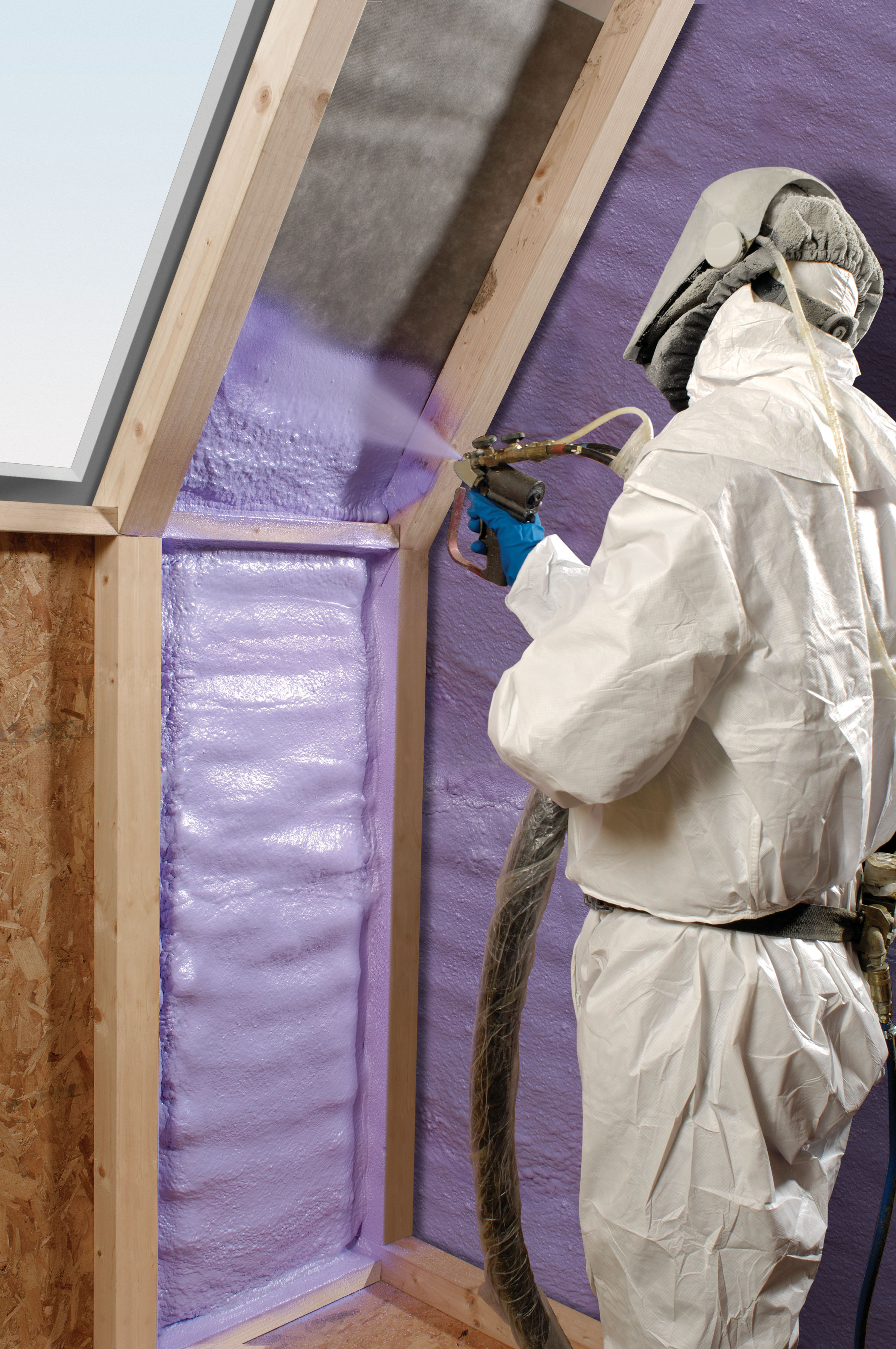
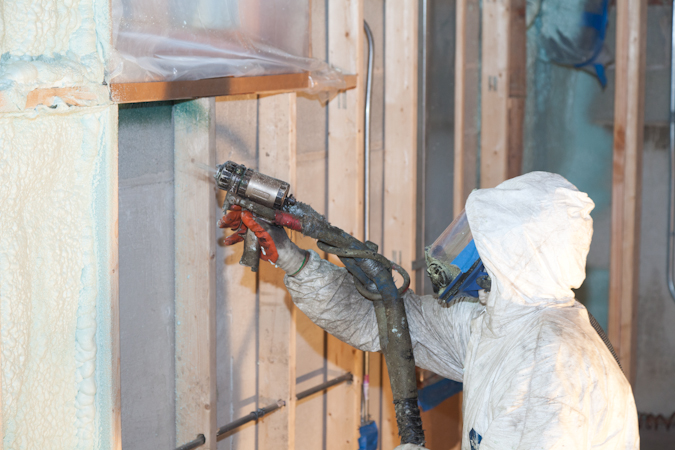
For conditioned basements, insulating interior foundation walls with rigid mineral wool board (RSI 3.5 to 5.3) or spray foam is standard practice. Spray foam at the rim joist is one of the highest-impact targeted measures available — it simultaneously insulates, air seals, and provides a vapour barrier at a location that often has no insulation at all in older construction. Spray foam rim joist kits for DIY installation are available; professional two-component spray foam delivers higher RSI values and better adhesion.
Installed cost for rim joist spray foam in a full-perimeter basement: $800 to $1,800. Projected savings: 5% to 12% of heating load. The Greener Homes Grant covers foundation insulation upgrades under the same RSI improvement thresholds used for walls.
4. Replacing or Upgrading the Heating System
Natural gas furnaces installed before 2000 typically operate at 78–82% AFUE. Mid-efficiency gas furnaces manufactured from 2000 to 2010 improved this to 80–92%. Modern condensing furnaces routinely achieve 96–98% AFUE, meaning fewer than 4% of combustion energy escapes through the flue. Replacing an old atmospheric furnace with a high-efficiency condensing unit reduces natural gas consumption by 15–25% for heating alone.
Cold climate heat pumps have become a serious consideration in all Canadian provinces following improvements in low-temperature performance. Models certified for Canadian conditions maintain rated capacity down to -25°C in some cases, eliminating the previous concern that heat pumps were ineffective below -10°C. In provinces with low electricity rates — British Columbia, Manitoba, and Quebec — a heat pump can deliver three to four units of heat energy for every unit of electrical energy consumed, dramatically outperforming any combustion system on operating cost.
| Heating System | Typical Efficiency | Installed Cost (est.) | Grant Availability |
|---|---|---|---|
| High-efficiency gas furnace (96% AFUE) | 96–98% AFUE | $3,500–$6,000 | Limited provincial rebates |
| Air-source heat pump (cold climate) | 200–350% COP | $5,000–$14,000 | Up to $5,000 Greener Homes |
| Ground-source heat pump | 300–500% COP | $20,000–$40,000 | Up to $5,000 + provincial |
| High-efficiency oil boiler (91% AFUE) | 87–91% AFUE | $4,000–$7,500 | Some provincial programs |
5. Heat Recovery Ventilation
As houses become more airtight through air sealing, controlled mechanical ventilation becomes a requirement rather than an option. The National Building Code of Canada requires mechanical ventilation in all new housing, and the Canadian Standards Association (CSA) F326 standard defines ventilation rates for occupied dwellings. An HRV (heat recovery ventilator) exhausts stale air while recovering 75–85% of its heat to pre-warm incoming fresh air, maintaining indoor air quality without the energy penalty of simply opening a window.
Installed costs for a whole-house HRV: $2,500 to $5,500 including ductwork modifications. The Greener Homes Grant includes HRV and ERV installations under its eligible measures, with grants of up to $1,000 available subject to performance specifications.
6. Window and Door Replacement
Windows are frequently the most visible energy efficiency concern for homeowners, but they are rarely the highest-priority measure in HOT2000 analysis. In most Canadian houses, the combined window-to-wall ratio is low enough that window upgrades improve comfort more than they reduce energy use. That said, single-glazed windows (common in homes built before 1960) and early double-pane units with aluminum frames represent significant thermal weak points.
Current ENERGY STAR Canada requirements for windows in most climate zones specify a maximum U-factor of 1.22 W/m²·K and a minimum Solar Heat Gain Coefficient of 0.25 for south-facing units in northern climates. Triple-glazed windows with warm-edge spacers and argon fill routinely achieve U-factors of 0.80–0.95 W/m²·K. The Canada Greener Homes Grant covers windows and doors meeting ENERGY STAR Most Efficient criteria at up to $250 per unit, to a maximum of $5,000.
Combining Measures: The Deep Retrofit Path
The Greener Homes Grant program, administered by Natural Resources Canada, is structured to incentivize combining measures rather than addressing only one. Homes that achieve a 25% or greater reduction in energy use intensity — typically by combining air sealing, attic insulation, basement insulation, and heating system replacement — qualify for the maximum grant level and may also access the Canada Greener Homes Loan, which provides up to $40,000 at 0% interest to cover the gap between grant funding and total installed cost.
Energy advisors model the "deep retrofit" scenario explicitly in the post-audit report, showing the projected EnerGuide score improvement and the combined savings from multiple concurrent measures. This total-house approach is more effective than piecemeal upgrades because measures interact: a new heat pump installed in a poorly sealed house will be oversized and cycle excessively; the same equipment in a well-sealed, well-insulated house operates efficiently and quietly for decades.
Upgrades must be completed within 18 months of the pre-retrofit audit to qualify for the Canada Greener Homes Grant. The post-retrofit audit confirming improvements must also be conducted by a registered energy advisor.
Where to Start
For most homeowners, the practical starting point is the pre-retrofit EnerGuide audit. The report tells you exactly where to spend money first. If the blower door test reveals ACH50 above 7, air sealing and attic insulation will almost always top the list. If the furnace was installed before 2000, heating system replacement typically follows. Windows and doors come later, once the envelope is performing well and mechanical systems are efficient.
Detailed grant program information for each province and territory is maintained by Natural Resources Canada and updated annually as program parameters change.